An exchange rate is simply the price of one currency in terms of another — how much of currency B you need to buy one unit of currency A. Simple in concept, but the number itself moves constantly, and where you convert money can change how much you actually get.
What Actually Moves Exchange Rates
- Interest rates — higher interest rates tend to attract foreign investment, increasing demand for that currency
- Inflation — currencies with higher inflation tend to weaken over time relative to lower-inflation currencies
- Economic and political stability — uncertainty typically pushes investors toward currencies seen as "safe"
- Trade balances — a country importing far more than it exports tends to see steady demand for foreign currency, pressuring its own currency down
Converting Quickly
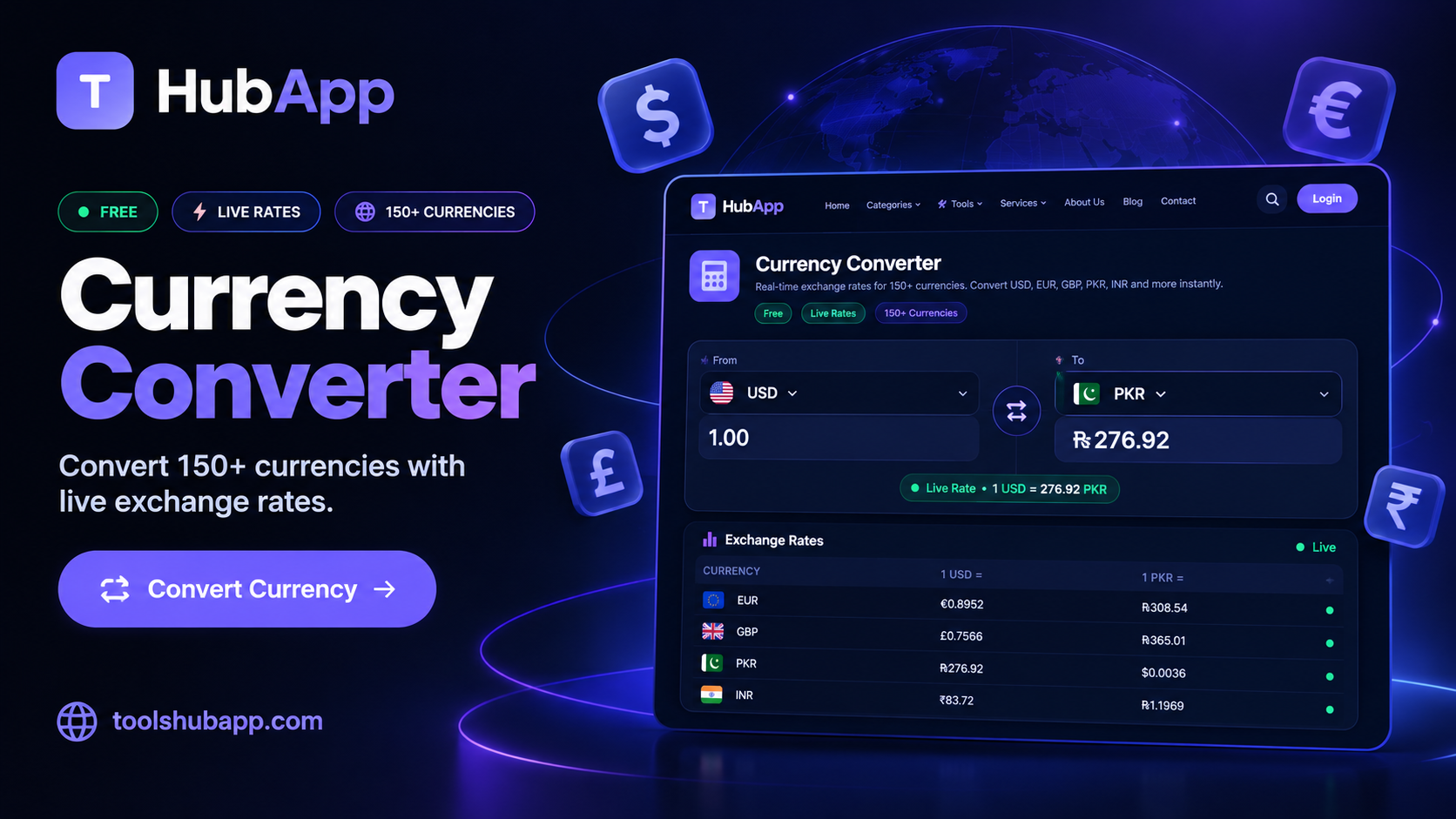
The Currency Converter gives you an instant conversion between currencies — useful for travel budgeting, online shopping, freelance invoices, or just understanding a price quoted in another currency.
The "Mid-Market Rate" vs What You Actually Get
The rate you see quoted in the news or on a converter tool is usually the mid-market rate — the midpoint between what banks buy and sell a currency for, with no markup. Banks, currency exchange counters, and payment apps almost always add a margin on top of this rate, plus sometimes a separate fee. This is why 100 units of currency converted at an airport kiosk often nets noticeably less than the "official" rate suggested.
Getting a Fair Conversion
- Compare the final amount you receive, not just the advertised rate — a "no fee" service with a bad rate can cost more than a service with a visible small fee and a fair rate.
- Airport currency counters are usually the worst rates — convenient, but the margin is typically the highest.
- Check the mid-market rate first so you know roughly what a fair conversion should give you, then compare that to what any service actually offers.
FAQ
Why do rates change even within the same day?
Currency markets trade continuously across global time zones, so rates shift in near real-time based on ongoing supply and demand.
Is a "strong" currency always better for a country?
Not necessarily — a strong currency helps importers and travelers but can hurt exporters, since their goods become relatively more expensive abroad.
What's the safest way to carry money while traveling?
A mix is usually recommended — a small amount of local cash for immediate needs, plus a card with reasonable foreign transaction fees, rather than converting a large sum all at once.